Travel
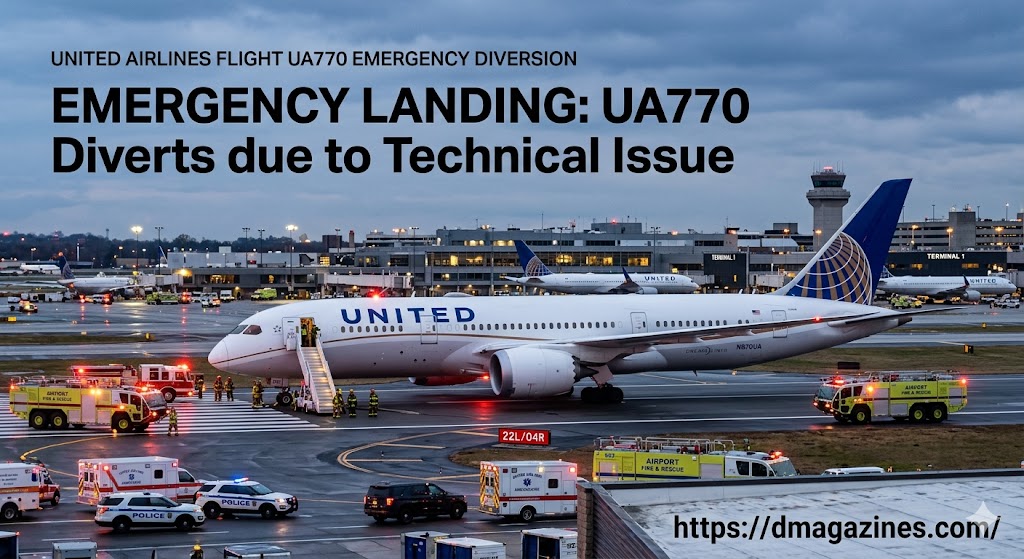
United airlines flight ua770 emergency diversion: 7 Powerful Lessons from a Sky-High Detour

Introduction
Flying is usually a quiet little bargain with the clouds. You buckle up, watch the safety card you’ve seen a dozen times, scroll through movies, and wait for the meal cart to rattle down the aisle. Then, every so often, the script changes. The captain speaks. The cabin goes still. A route drawn neatly across an ocean suddenly bends toward a different airport.
That’s why the story of UA770 caught attention. Public aviation reporting said United Airlines flight UA770, operating from Barcelona to Chicago, declared an emergency and diverted to London Heathrow on May 27, 2025. The aircraft was reported as a Boeing 787-9, and the crew reportedly selected emergency transponder code 7700 before heading to Heathrow. The same route, Barcelona to Chicago, is listed by flight-status services for UA770.
Now, here’s the thing: an emergency diversion sounds dramatic because, well, it is. But “dramatic” doesn’t automatically mean “chaotic.” In aviation, diversions are often proof that the system is working exactly as designed. When something isn’t right, pilots don’t shrug and keep going. They act. Air traffic control clears space. Airport teams prepare. Passengers may feel shaken, sure, but the machine of aviation safety begins moving with remarkable speed.
What the United airlines flight ua770 emergency diversion Reveals About Modern Flying
At its heart, this event is less about panic and more about procedure. A long-haul flight from Europe to the United States involves layers of planning: fuel calculations, alternate airports, weather checks, oceanic routing, crew briefings, maintenance records, and constant communication. So when a crew chooses to divert, it’s not a wild guess made in the heat of the moment. It’s a decision based on training, checklists, available airports, aircraft condition, and passenger safety.
AIRLIVE reported that UA770 had departed Barcelona about an hour and a half earlier before the crew declared an emergency and diverted to London Heathrow. The outlet also reported that United confirmed the flight was diverting to LHR.
That’s the confirmed core. What remains less clear is the exact cause. Some online posts have floated possible explanations, from technical issues to pressurization concerns, but without an official final report available in the sources reviewed, those details should be treated carefully. In aviation writing, guessing can spread faster than a tailwind. Better to say what’s known and leave the mystery box closed until reliable information opens it.
The Route: Barcelona to Chicago
Barcelona to Chicago is not a hop across town. It’s a major transatlantic journey, the kind where passengers settle in for hours of sleep, snacks, movies, and the slow-moving map on the seatback screen. UA770 is listed as an international United Airlines route between Barcelona-El Prat Airport and Chicago O’Hare International Airport.
Midway through the early part of such a flight, a diversion to London can make practical sense. Heathrow is one of the world’s major international hubs, with long runways, emergency services, maintenance access, airline support, customs facilities, hotels, and onward flight options. In plain English, it’s the kind of place you want nearby when a flight needs help.
Why London Heathrow Was a Logical Choice
A diversion airport isn’t chosen because it looks nice on a postcard. Crews and dispatch teams consider several factors:
- Distance and fuel remaining
- Weather at the alternate airport
- Runway length and aircraft compatibility
- Medical and emergency response capability
- Airline ground support
- Passenger handling and onward travel options
- Air traffic congestion and landing priority
So, while passengers may wonder, “Why not keep going?” the cockpit view is different. From up front, safety is the scoreboard, and everything else is just noise.
What Does “Squawk 7700” Mean?
“Squawk 7700” is aviation shorthand for a general emergency signal sent through the aircraft’s transponder. The FAA’s air traffic control guidance says code 7700 is assigned when a pilot declares an emergency and the aircraft is not radar identified. SKYbrary also describes Mode 3A Code 7700 as the emergency transponder code.
That little four-digit code does a big job. It alerts air traffic control systems that an aircraft needs priority attention. It doesn’t tell the public exactly what’s wrong. It doesn’t mean an engine has failed, a passenger is ill, or there’s smoke in the cabin. It simply means the crew has identified a situation serious enough to require emergency handling.
Not Every Emergency Means Disaster
This is where travelers often get spooked, and fair enough. The word “emergency” lands heavy. But in aviation, declaring an emergency can be a cautious, professional move. Pilots may declare one to get priority routing, reduce radio delays, secure emergency services on arrival, or protect options before a situation becomes worse.
Think of it like calling an ambulance early instead of waiting until things go sideways. It’s not overreacting. It’s smart.
Inside the Passenger Experience
Sitting in a cramped seat, the announcement can hit like a bucket of cold water. One moment, someone’s choosing between pasta and chicken. The next, the aircraft is turning toward London.
Maybe the cabin lights stay soft. Maybe the crew walks briskly but calmly. Maybe a parent squeezes a child’s hand and says, “It’s okay, sweetheart,” even while silently wondering the same thing. That’s the strange emotional weather of a diversion: calm on the outside, questions buzzing underneath.
For passengers, the hardest part is usually uncertainty. People can handle delays. They can handle airport hotels, missed meetings, and the sad little sandwich handed out at midnight. What makes the stomach twist is not knowing why plans changed.
The Power of a Calm Announcement
A captain’s announcement during a diversion has to do two jobs at once. It must inform without alarming. It must be honest without dumping technical jargon into a nervous cabin.
A good announcement might sound something like this:
“We’re diverting to London Heathrow as a precaution. The aircraft is operating safely, and our crew is following standard procedures. Emergency services will meet us on arrival, which is routine in this situation.”
Simple. Clear. No fluff.
When people hear calm, they borrow it. When the crew looks steady, passengers breathe a little easier. Funny how that works, isn’t it?
Crew Training: The Quiet Hero of the Story
The most impressive part of an emergency diversion is often what passengers never see. Behind the cockpit door, pilots run checklists, talk to air traffic control, coordinate with dispatch, review landing weight, assess weather, and prepare for arrival. In the cabin, flight attendants secure service items, monitor passengers, prepare for possible medical needs, and keep aisles clear.
It’s not magic. It’s training.
Airline crews practice abnormal and emergency scenarios again and again. By the time something happens in real life, the goal is for the response to feel almost boringly procedural. That’s a good thing. In aviation, boring is beautiful.
Safety Over Schedule
A flight diversion can be expensive. It can inconvenience hundreds of people. It can disrupt aircraft rotations, crew schedules, airport gates, meal catering, baggage connections, and onward itineraries.
And still, the decision is easy.
Safety wins.
Not “safety if convenient.” Not “safety unless it costs too much.” Safety, full stop. That’s why aviation has become one of the safest forms of long-distance travel. The system is built to treat doubt seriously.
Common Reasons Flights Divert
Since the exact cause of UA770’s diversion was not clearly confirmed in the reliable sources reviewed, it’s helpful to understand the broader reasons flights may divert. These include:
- Medical emergencies
A passenger or crew member may need urgent care that cannot wait until the scheduled destination. - Mechanical or technical indications
Aircraft systems are heavily monitored. A warning light, sensor issue, or abnormal reading may lead crews to land as a precaution. - Cabin pressure concerns
If pressurization behaves unexpectedly, pilots may descend and divert to protect everyone onboard. - Smoke, fumes, or unusual smells
Crews take potential fire or electrical concerns very seriously. - Weather changes
Storms, wind shear, fog, or closed runways can make the planned destination unsuitable. - Security or passenger disruption
Rarely, unruly behavior or safety threats can require an aircraft to land early. - Operational constraints
Fuel, crew duty limits, airport closures, or airspace restrictions can also force a route change.
The important point is this: diversion is not failure. It’s a safety valve.
What Passengers Should Do During a Diversion
Nobody wants their travel day turned upside down. Still, a little preparation helps when plans go off the rails.
Keep Calm and Listen First
When the crew gives instructions, listen before reaching for your phone. Cabin crews are trained for these moments. If they ask passengers to remain seated, clear aisles, fasten seatbelts, or pause service, there’s a reason.
Save Your Documents and Receipts
After landing, passengers may need passports, boarding passes, hotel receipts, meal receipts, and rebooking details. Keep everything in one place. Future-you will thank present-you.
Use the Airline App
The app may update before gate agents can speak to every passenger. Check for rebooking options, hotel vouchers, meal credits, and baggage notices.
Be Kind to the Crew
This sounds simple, but goodness, it matters. The people in uniform didn’t cause the diversion. They’re trying to get everyone through it safely. A little patience goes a long way.
Why Stories Like This Travel So Fast Online
Aviation incidents are magnets for attention. Flight numbers trend. Screenshots from tracking apps spread. People see a 7700 code and instantly wonder what happened.
That curiosity is human. But it creates a problem: speculation fills empty space. Before official details emerge, blogs and social posts may repeat unverified claims. One post says technical issue. Another says medical emergency. Another invents cabin drama. And there it goes, rolling downhill like a suitcase with a broken wheel.
A better approach is slower but safer: separate confirmed facts from possible explanations. For UA770, the solid public details are the route, aircraft report, emergency declaration, and diversion to Heathrow. The precise cause deserves caution unless confirmed by United, regulators, or a credible aviation investigation source.
The Bigger Lesson: Aviation Safety Is Built on Redundancy
Modern aircraft are designed with backups upon backups. Pilots are trained to assume, verify, and cross-check. Air traffic controllers create priority paths. Airports prepare emergency services even when they’re not ultimately needed.
That layered system is why a tense moment in the sky can end with passengers walking safely into a terminal, tired and confused, but unharmed. It’s not luck alone. It’s planning.
The story also reminds us that air travel is both ordinary and extraordinary. We’ve gotten used to crossing oceans in a metal tube at high altitude while sipping coffee and watching sitcoms. That’s wild! And yet, behind that everyday miracle is a serious safety culture that treats small warnings with big respect.
FAQs
What happened to United Airlines flight UA770?
Public aviation reporting said UA770, traveling from Barcelona to Chicago, declared an emergency and diverted to London Heathrow on May 27, 2025. The aircraft was reported as a Boeing 787-9.
Was the cause of the diversion officially confirmed?
In the reliable sources reviewed, the exact cause was not clearly confirmed by an official final report. Some online sources speculate, but those claims should be treated carefully unless supported by United Airlines, regulators, or a credible aviation authority.
What does squawk 7700 mean?
Squawk 7700 is a general emergency transponder code. It alerts air traffic control that an aircraft needs priority handling due to an emergency situation.
Does squawk 7700 mean the plane is about to crash?
No. It means the crew has declared an emergency or needs priority assistance. The situation may be mechanical, medical, operational, or something else. Many flights that squawk 7700 land safely.
Why would a flight from Barcelona to Chicago divert to London?
London Heathrow is a major international airport with long runways, emergency services, maintenance support, passenger facilities, and strong airline infrastructure. Those factors can make it a practical diversion choice.
Do passengers get compensation after an emergency diversion?
It depends on the cause, route, airline policy, and applicable passenger-rights rules. Travelers should keep receipts, monitor airline messages, and ask the airline about rebooking, meals, hotels, and reimbursement.
Is flying still safe after incidents like this?
Yes. Diversions can actually show that aviation safety systems are working. When crews detect a concern, they’re trained to act early rather than take unnecessary risks.
Conclusion
The United airlines flight ua770 emergency diversion is a reminder that aviation safety isn’t built on pretending everything will always go perfectly. It’s built on readiness. It’s built on pilots who make conservative decisions, flight attendants who keep cabins calm, controllers who clear the way, and airports that prepare before the wheels touch the runway.
For passengers, a diversion can feel like a thunderclap in the middle of an ordinary day. Plans change. Connections vanish. Nerves jump. But viewed from the wider lens, a safe diversion is not a travel disaster. It’s a safety system doing its job.
And really, that’s the quiet comfort here: when the sky throws a curveball, trained people catch it.


Planning a refreshing getaway during hot weather often leads families and travelers to exciting amusement destinations. Among the popular entertainment attractions in West Bengal, searches for durgapur water park ticket price have increased significantly as visitors look for affordable and enjoyable recreational experiences.
Water parks have become one of the most preferred weekend destinations for families, students, tourists, and groups seeking relaxation and adventure. From thrilling slides and wave pools to family-friendly water rides, these parks provide entertainment for people of all age groups.
Understanding durgapur water park ticket price in advance helps visitors plan their travel budget, choose suitable packages, and avoid confusion during entry. Along with ticket pricing, visitors also want information about facilities, ride availability, timings, safety measures, food services, and nearby attractions.
This detailed guide explains everything related to durgapur water park ticket price while also covering visitor experiences, travel tips, and important details that can help make your trip enjoyable and stress-free.
Why Water Parks in Durgapur Are Popular
Durgapur is one of the important industrial and urban cities in West Bengal. Along with commercial development, the city has also become known for recreational and family entertainment destinations.
Perfect Weekend Destination
Families often search for nearby places where they can spend quality time together. Water parks offer a combination of relaxation and excitement in a single location.
Relief During Summer Season
The hot and humid climate in many parts of India increases the popularity of water-based attractions, especially during school holidays and summer vacations.
Suitable for All Age Groups
Water parks are designed to entertain:
- Children
- Teenagers
- Adults
- Families
- Tourist groups
- Corporate visitors
This broad appeal contributes to their growing popularity.
Understanding Durgapur Water Park Ticket Price
One of the first things visitors search before planning a trip is the durgapur water park ticket price. Entry charges usually depend on several factors.
General Entry Charges
Most water parks offer separate ticket categories based on age groups.
These may include:
- Adult tickets
- Children’s tickets
- Senior citizen discounts
- Family packages
- Group bookings
Prices may also vary depending on weekdays and weekends.
Weekend and Holiday Pricing
Water parks usually experience higher visitor traffic during weekends and holidays.
Higher Demand During Holidays
Because of increased demand, ticket prices may be slightly higher during:
- Public holidays
- Summer vacations
- Festival periods
- School holidays
Advance Booking Benefits
Some parks offer discounts for online or advance bookings.
Seasonal Variations in Ticket Rates
The durgapur water park ticket price may change according to seasonal demand.
Summer Season
Summer remains the busiest period for water parks due to high temperatures.
Off-Season Discounts
During less crowded periods, visitors may find discounted entry packages and promotional offers.
Facilities Included in Water Park Tickets
Most visitors want to know what facilities are covered under the entry fee.
Access to Water Rides
The ticket generally includes access to multiple rides and attractions.
These may include:
- Wave pools
- Water slides
- Rain dance areas
- Lazy rivers
- Swimming pools
- Kids’ splash zones
Locker and Changing Room Facilities
Many parks provide changing rooms and lockers for visitor convenience.
Separate Family Areas
Family-friendly parks often maintain dedicated areas for children and parents.
Seating and Rest Areas
Visitors can usually relax in shaded seating zones between activities.
Popular Attractions Inside Water Parks
Modern water parks are designed to provide diverse entertainment options.
Wave Pools
Wave pools are among the most popular attractions because they simulate ocean-like wave experiences.
Thrill Slides
Adventure seekers often enjoy high-speed water slides and spiral rides.
Rain Dance Zones
Music-based rain dance sections create a lively and energetic atmosphere.
Children’s Play Areas
Special shallow pools and mini slides are usually designed for younger children.
Best Time to Visit Water Parks in Durgapur
Choosing the right time can improve your overall experience.
Summer Months
The most popular season for water parks is typically between March and June.
Weekdays Are Less Crowded
Visitors who prefer peaceful environments may enjoy weekday visits more than weekends.
Morning Visits Are Recommended
Arriving early helps visitors enjoy rides before peak crowd hours.
Food and Dining Facilities
Most water parks include food courts and snack areas inside the premises.
Variety of Food Options
Visitors may find:
- Fast food
- Snacks
- Cold beverages
- Ice cream
- Family meal options
Hygienic Dining Areas
Well-maintained food zones improve visitor comfort and convenience.
Safety Measures in Water Parks
Safety is one of the most important concerns for visitors.
Lifeguard Availability
Professional lifeguards are generally positioned near pools and major rides.
Ride Safety Instructions
Visitors are usually guided about:
- Height restrictions
- Ride safety rules
- Pool depth information
- Emergency procedures
Clean Water Maintenance
Regular filtration and cleaning systems help maintain hygiene standards.
Family-Friendly Entertainment Experience
Water parks continue gaining popularity because they provide entertainment suitable for entire families.
Activities for Children
Kids can safely enjoy splash pools and low-depth attractions.
Relaxation for Adults
Adults often enjoy lazy rivers, seating areas, and swimming pools.
Group Enjoyment
Water parks are ideal for:
- School trips
- Birthday celebrations
- Family outings
- Corporate events
How Ticket Prices Affect Visitor Planning
Understanding durgapur water park ticket price helps travelers organize their budget efficiently.
Budget-Friendly Packages
Many parks offer combo packages for larger groups and families.
Online Booking Discounts
Advance reservations may provide lower prices compared to walk-in entries.
Additional Costs to Consider
Visitors may need to budget separately for:
- Food and beverages
- Locker rentals
- Parking charges
- Costume rentals
- Transportation expenses
Importance of Online Information for Travelers
Travelers increasingly rely on online searches before visiting tourist attractions.
Better Planning
Detailed online information helps visitors prepare in advance.
Comparison of Facilities
Users often compare different parks based on rides, cleanliness, and pricing.
Customer Reviews Influence Decisions
Visitor feedback often affects travel planning choices.
Tourism and Recreation in Durgapur
The growing popularity of recreational destinations contributes positively to local tourism.
Entertainment Industry Growth
Family entertainment centers support local economic activity.
Attraction for Nearby Cities
Visitors from neighboring regions also travel to Durgapur for recreational experiences.
Weekend Tourism Trends
Short-distance tourism has increased significantly in recent years.
Tips for Visiting a Water Park
Visitors can improve their experience by following simple planning tips.
Carry Essential Items
Important items may include:
- Swimwear
- Towels
- Waterproof bags
- Sunscreen
- Extra clothing
Follow Safety Rules
Always follow ride instructions and lifeguard guidance.
Stay Hydrated
Hot weather and physical activities increase the need for hydration.
Arrive Early
Early visits allow better access to rides before crowds increase.
Role of Digital Marketing in Water Park Popularity
Online promotion plays a major role in attracting visitors.
Social Media Promotion
Photos and videos shared online often increase public interest.
Online Ticket Booking Systems
Digital reservations improve convenience for visitors.
Search Engine Visibility
Searches related to durgapur water park ticket price continue increasing because travelers prefer researching destinations online before visiting.
Future of Water Park Entertainment in India
The entertainment industry in India continues expanding rapidly.
Increasing Demand for Recreational Destinations
Urban families increasingly seek nearby leisure options.
Technology Integration
Modern parks now include digital ticketing and advanced ride systems.
Improved Visitor Experiences
Future developments may include:
- Better safety systems
- Enhanced attractions
- Smart booking technologies
- Eco-friendly water management
Why Water Parks Remain Popular Among Families
Water parks combine adventure, relaxation, and social entertainment in one location.
Affordable Recreation
Compared to long vacations, local water parks provide cost-effective entertainment.
Fun for Multiple Generations
Both children and adults can enjoy activities together.
Memorable Experiences
Water rides and family outings create lasting memories.
Conclusion
Understanding durgapur water park ticket price is essential for visitors planning a fun and enjoyable recreational trip. Water parks in Durgapur continue attracting families, tourists, students, and adventure lovers because they offer exciting rides, refreshing attractions, and family-friendly entertainment experiences.
From thrilling slides and wave pools to children’s play areas and relaxing facilities, modern water parks provide something for everyone. By checking ticket details, planning visits wisely, and following safety guidelines, visitors can enjoy a memorable experience without unnecessary stress.
As recreational tourism continues growing in India, destinations like Durgapur’s water parks are expected to become even more popular among travelers seeking affordable and enjoyable leisure activities.
Frequently Asked Questions (FAQs)
1. What is the average Durgapur water park ticket price?
Ticket prices may vary depending on the park, visitor age, weekdays, weekends, and seasonal offers.
2. Are food facilities available inside water parks?
Yes, most water parks provide food courts, snacks, beverages, and family dining areas.
3. Do water parks offer discounts for groups or families?
Many parks provide special packages for families, students, and group bookings.
4. Which is the best time to visit a water park in Durgapur?
Summer mornings and weekdays are generally considered ideal due to lower crowd levels.
5. Are safety measures available at water parks?
Yes, most water parks maintain lifeguards, safety instructions, clean water systems, and visitor support facilities.

Embarqmail Login: Accessing, Managing, and Troubleshooting Your Email Account

WhatUTalkingBoutWillis Gift Guide: Thoughtful Gift Ideas for Every Occasion

Michael Steele MSNBC Salary: Career, Earnings, Net Worth, and Media Success
-

 Fashion9 years ago
These ’90s fashion trends are making a comeback in 2017
-

 Entertainment6 months ago
Big brother magazine: 7 Powerful Lessons from a Rebel Skateboarding Icon
-
Entertainment9 years ago
The final 6 ‘Game of Thrones’ episodes might feel like a full season
-

 Blog6 months ago
مانهوا الدرس السري: The Hidden World Behind This Popular Manhwa
-
Fashion9 years ago
According to Dior Couture, this taboo fashion accessory is back
-
Sports9 years ago
Boxing continues to knock itself out with bewildering, incorrect decisions
-
Entertainment9 years ago
Mod turns ‘Counter-Strike’ into a ‘Tekken’ clone with fighting chickens
-
Entertainment9 years ago
The old and New Edition cast comes together to perform