
Business
Centro politecnico superior: 7 Powerful Lessons from a Remarkable Engineering Legacy

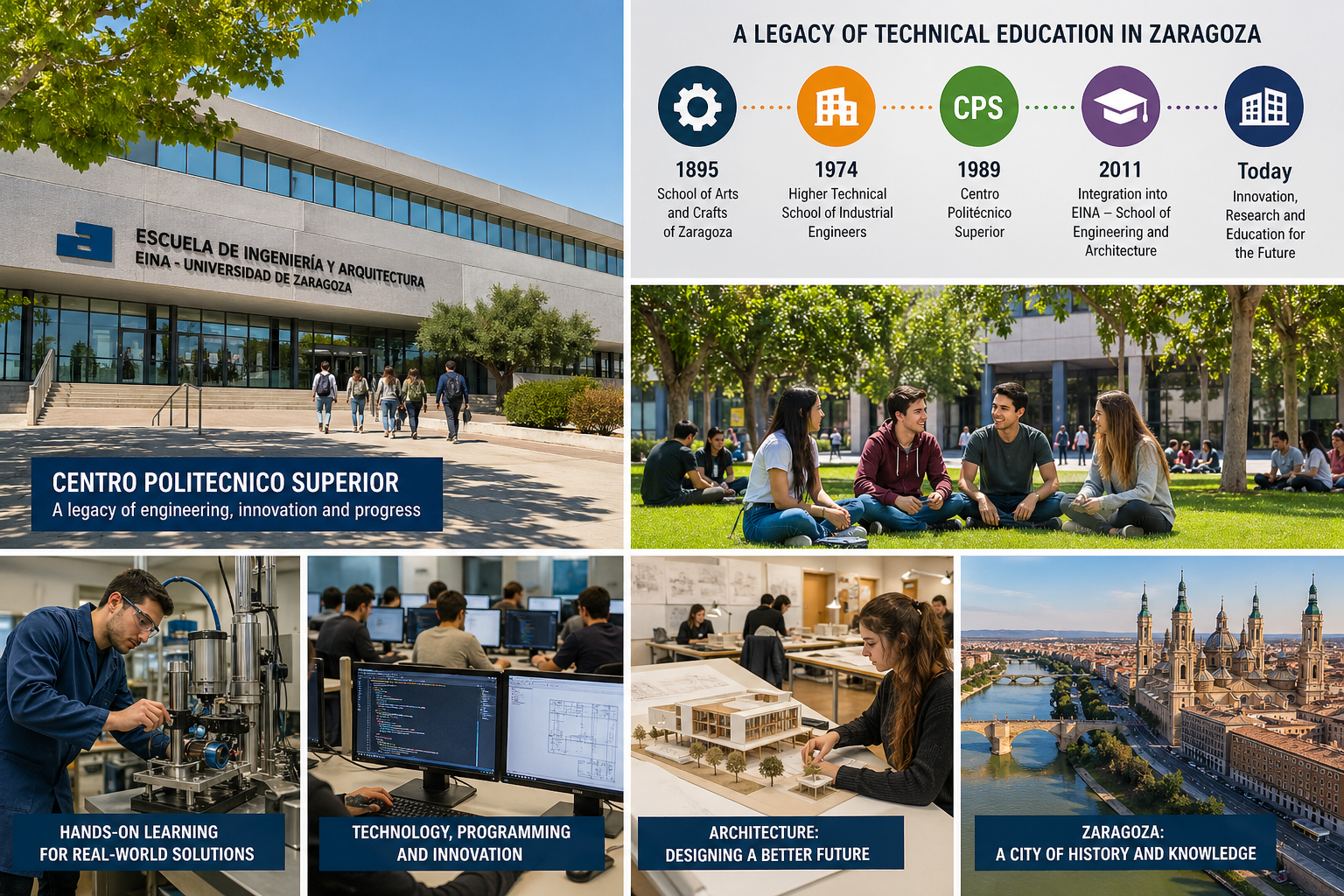
The phrase Centro politecnico superior points to one of the most meaningful names in the history of technical education in Zaragoza, Spain. Although the former Centro Politécnico Superior no longer operates as a separate school, its academic spirit continues through the Escuela de Ingeniería y Arquitectura, also known as EINA, at the University of Zaragoza. EINA officially explains that today’s School of Engineering and Architecture was created in 2011 through the integration of the former Centro Politécnico Superior and the University School of Industrial Technical Engineering of Zaragoza.
Introduction to a Historic Polytechnic Institution
To understand this institution, it helps to look at it as more than a building or a school name. It represents a long tradition of engineering, architecture, practical learning, and innovation. For many students and graduates, the old CPS name is still tied to memories of demanding courses, teamwork, laboratories, projects, and a strong connection with the professional world.
The modern EINA continues that mission. Its official welcome page describes the school as a place where engineering and architecture help students create a positive impact on society. The school also presents itself as one of the largest teaching centers of the University of Zaragoza, with thousands of students, hundreds of professors, and many administrative and service professionals supporting academic life.
What Made the Former CPS Important?
The former CPS became important because it helped bring together several advanced technical fields under one academic identity. It was not only about theory. It was about preparing people to solve real problems in factories, cities, laboratories, communication systems, computing, energy, and design.
Engineering Education in Zaragoza
Zaragoza has a long technical education tradition. EINA traces this history back to 1895, when the School of Arts and Crafts of Zaragoza began its work. That early school reflected the needs of a changing society, where industry, urban growth, and skilled technical work were becoming more important.
This background matters because engineering schools do not appear overnight. They grow from social needs. As cities expand and industries become more advanced, students need stronger training in mathematics, materials, machines, electricity, design, and later digital systems.
A Bridge Between Industry, Technology, and Society
The former CPS helped connect education with the needs of the real world. Its programs were linked to areas that shaped modern life: industrial engineering, telecommunications, computing, chemical engineering, and architecture. These fields affect how people communicate, travel, build homes, manage resources, and develop new technologies.
Historical Roots of Technical Education in Zaragoza
The story begins long before the CPS name appeared. The technical education tradition in Zaragoza started with arts, crafts, and industrial skills. Over time, those studies became more formal, more scientific, and more connected to university-level training.
EINA’s history page explains that the School of Arts and Crafts opened in 1895 and later evolved through several forms of technical and industrial education. This shows a steady path from craft-based training to modern engineering and architecture.
From Arts and Crafts to Modern Engineering
At first, technical education focused on practical skills. Students learned useful knowledge for trades, workshops, and industry. But as technology advanced, the curriculum had to grow. Machines became more complex. Electricity became central. Later, computing and communication systems changed almost every profession.
That is why institutions like CPS became so valuable. They gave students a structured way to move from basic technical knowledge to advanced professional expertise.
The Rise of Industrial Education
In 1974, the Higher Technical School of Industrial Engineers of Zaragoza began its work. EINA states that this school started teaching Industrial Engineering with electrical and mechanical specialties, before later moving to the ACTUR area in 1986.
This was a major step. Industrial engineering was closely connected to Spain’s economic and technological development. Students trained in this field could work in production, energy, mechanical systems, electrical systems, management, and research.
The Creation of the Higher Technical School of Industrial Engineers
The creation of the Higher Technical School of Industrial Engineers helped set the stage for the later CPS identity. It gave Zaragoza a strong base for advanced engineering education.
Growth During the 1970s
The 1970s were a time of change for higher education and industry. Universities needed to prepare graduates for new economic needs. Engineering schools became places where students learned not only formulas, but also how to apply knowledge to real challenges.
Students had to understand systems, design processes, safety, efficiency, and problem-solving. These skills are still essential today.
The Move Toward a Broader Polytechnic Model
In 1989, the school changed its name to Centro Politécnico Superior. According to EINA, this change came before the launch of new studies in Telecommunications Engineering in 1990, Computer Engineering in 1992, Chemical Engineering in 1994, and Architecture in 2008.
This wider academic model made sense. The world was becoming more connected, digital, and design-focused. A polytechnic center could bring different technical disciplines together under one roof.
Centro politecnico superior and Its Academic Identity
The name Centro politecnico superior still appears in searches because it carries academic weight. It is linked with a period when technical education in Zaragoza expanded strongly into modern fields.
Telecommunications, Computer Science, Chemical Engineering, and Architecture
The growth of CPS reflected major global changes. Telecommunications helped connect people and businesses. Computer engineering became essential for software, hardware, data, and automation. Chemical engineering supported industry, materials, energy, and environmental solutions. Architecture added design, urban thinking, and human-centered space planning.
Together, these fields created a rich academic environment. Students could learn near other disciplines, which encouraged broader thinking.
Why the CPS Name Still Matters
Even after institutional changes, names matter. Alumni may still use the old name on records, CVs, memories, or professional profiles. Researchers may find it in older publications. Students may see it in historical documents. For that reason, the CPS identity remains part of the University of Zaragoza’s academic story.
Integration into the School of Engineering and Architecture
In 2011, the former CPS became part of a new structure. EINA’s history page says that on April 14, 2011, the Official Gazette of Aragon published the order authorizing the creation of the School of Engineering and Architecture and the suppression of the former Centro Politécnico Superior and the University School of Industrial Technical Engineering.
The 2011 Transformation
This change was not simply a closing. It was a transformation. The goal was to create a new school that could manage updated bachelor’s and master’s degrees under the European Higher Education Area model.
That made EINA the modern academic home for many programs and traditions that had existed before. In simple words, the name changed, the structure changed, but the educational mission continued.
The Role of EINA Today
Today, EINA is the School of Engineering and Architecture of the University of Zaragoza. Its website lists academic areas such as undergraduate studies, master’s studies, international mobility, internships, research groups, doctoral programs, entrepreneurship, sustainability, equality, and student services.
For students, that means the school is not only about attending lectures. It is also about projects, research, mobility, career preparation, and community life.
Campus, Facilities, and Student Life
A strong technical school needs more than classrooms. It needs laboratories, study spaces, project areas, libraries, and links with companies and research groups.
Río Ebro Campus
EINA is located at María de Luna, 3, 50018 Zaragoza, according to the school’s official website. The campus location is important because it places students in an academic environment shaped by engineering and architecture.
A campus like this gives students chances to meet classmates from different programs. That matters because many real-world projects need mixed teams.
Learning Spaces, Laboratories, and Collaboration
Engineering and architecture students often learn best by doing. They design, test, measure, model, calculate, draw, code, and improve. A good technical education helps students turn ideas into working solutions.
The EINA welcome page also emphasizes activities with students from other degrees, professional contact, internships, and exchange programs with foreign universities. These experiences can help students build confidence before entering the job market.
Academic Strengths and Modern Programs
The former CPS legacy lives on through modern academic pathways. EINA’s official site shows a broad offer connected with engineering, architecture, research, mobility, internships, and professional development.
Undergraduate and Master’s Pathways
Students interested in technical fields can explore areas such as architecture, biomedical engineering, industrial technologies, telecommunications technologies, electrical engineering, and electronics and automation through EINA’s listed study options.
These areas match many of today’s big challenges. Society needs better buildings, cleaner energy, smarter machines, safer medical technologies, stronger digital networks, and more sustainable systems.
Lifelong Learning and Professional Skills
Education no longer ends at graduation. Engineers and architects must keep learning because tools and standards change. EINA’s welcome page mentions continuing education and lifelong learning as part of its academic offer.
That is a smart approach. A graduate who keeps learning can adapt to new software, new materials, new environmental rules, and new workplace demands.
Research, Innovation, and Industry Links
A technical school becomes stronger when it connects teaching with research and industry. Students benefit when their teachers are active in current projects and when companies share real problems.
Applied Research Culture
EINA’s site includes sections for doctoral programs, research groups, research institutes, company chairs, and entrepreneurship. These areas show that the school is involved not only in teaching, but also in creating and transferring knowledge.
Applied research is especially important in engineering and architecture. It can lead to better materials, better systems, safer designs, smarter cities, and more efficient processes.
Transfer of Knowledge to Society
The best technical education does not stay inside the classroom. It reaches society through graduates, research, patents, public projects, startups, and partnerships.
That is one of the strongest lessons from the CPS legacy. A school can shape a region by preparing professionals who build, repair, design, program, analyze, and lead.
Why Students Still Search for This Name
People still search for the old name because institutional history does not disappear. It stays in documents, memories, diplomas, publications, and alumni networks.
Alumni Memory
For many graduates, CPS was part of their identity. They may remember the name more strongly than later institutional changes. That is normal. Schools are not only official structures; they are also communities.
Academic Records and Historical References
The old name may also appear in academic records, research papers, thesis archives, and professional biographies. When someone sees the name, they may want to know what it was, where it was located, and what it became.
7 Powerful Lessons from This Academic Legacy
- Technical education must evolve. The path from arts and crafts to engineering and architecture shows how schools must adapt to society’s needs.
- Names can change, but missions can continue. CPS became part of EINA, yet its academic purpose survived.
- Industry and university need each other. Engineering education is strongest when connected with real problems.
- Interdisciplinary learning matters. Modern challenges often combine computing, design, communication, energy, and materials.
- History builds trust. A long educational tradition gives students and employers confidence.
- Research strengthens teaching. Students gain more when their school is active in innovation.
- Lifelong learning is essential. Engineers and architects must keep growing throughout their careers.
FAQs About Centro politecnico superior
What was the Centro Politécnico Superior?
It was a former higher polytechnic center of the University of Zaragoza connected with engineering, architecture, and technical education. It later became part of EINA in 2011.
Does CPS still exist as a separate school?
No. The former CPS was integrated into the School of Engineering and Architecture, known as EINA, in 2011.
Where is the current EINA located?
EINA is located at María de Luna, 3, 50018 Zaragoza, Spain.
What fields were linked with the former CPS?
The former CPS was linked with industrial engineering, telecommunications, computer engineering, chemical engineering, and architecture.
Why do people still search for the old name?
People search for it because the name appears in older academic documents, alumni memories, research records, and historical references.
Where can students find current academic information?
Students should use the official EINA website for updated information about admissions, degrees, schedules, mobility, internships, and student services.
Conclusion
The story of Centro politecnico superior is really a story about growth, change, and educational purpose. From Zaragoza’s early technical training tradition to the modern School of Engineering and Architecture, this legacy shows how institutions can adapt while keeping their core mission alive.
Today, EINA carries forward that mission through engineering, architecture, research, innovation, student support, international opportunities, and professional preparation. The old CPS name remains important because it reminds students, graduates, and researchers of a strong academic chapter in Zaragoza’s technical education history.

The BTWRadiovent Event by BetterThisWorld has emerged as a unique platform designed to bring together individuals, professionals, creators, and thought leaders who are passionate about growth, innovation, and positive change. In a world where meaningful conversations often get lost in the noise of digital content, this event creates an environment where ideas can be shared, discussed, and transformed into action.
Whether you are an entrepreneur, student, business professional, content creator, or lifelong learner, the event offers valuable insights and opportunities for personal and professional development. Through engaging discussions, expert-led sessions, and interactive experiences, participants gain access to knowledge that can help them achieve their goals and expand their perspectives.
This article explores the significance, objectives, structure, benefits, and future potential of this increasingly recognized event.
Understanding the BTWRadiovent Event by BetterThisWorld
The BTWRadiovent Event by BetterThisWorld is designed to encourage meaningful dialogue, inspire innovation, and foster community engagement. Unlike traditional conferences that focus solely on presentations, this event emphasizes interaction, collaboration, and practical learning.
Participants are exposed to a wide range of topics, including leadership, entrepreneurship, personal growth, technology, communication, productivity, and social impact. The event serves as a bridge between experts and audiences, creating an atmosphere where learning becomes both informative and actionable.
The Vision Behind BetterThisWorld
BetterThisWorld is centered on the idea that positive transformation begins with knowledge, awareness, and community participation. The organization aims to empower individuals through educational initiatives, discussions, and collaborative opportunities.
The event reflects this vision by creating a platform where attendees can:
- Learn from experienced professionals
- Exchange innovative ideas
- Develop practical skills
- Build valuable connections
- Explore emerging trends
By focusing on these objectives, the initiative helps participants become more confident, informed, and prepared for future challenges.
Why the Event Is Gaining Popularity
Growing Demand for Meaningful Conversations
Many people seek authentic discussions rather than superficial online content. The event fulfills this demand by providing sessions that encourage thoughtful engagement and real-world learning.
Access to Industry Experts
One of the strongest attractions is the opportunity to hear from experienced speakers who share practical insights rather than theoretical concepts.
Focus on Personal Development
Attendees often participate because the event offers strategies that can improve leadership skills, communication abilities, productivity, and career growth.
Community Building
The event encourages collaboration among participants from diverse backgrounds, creating an environment where lasting professional relationships can develop.
Key Features of the BTWRadiovent Event by BetterThisWorld
Expert Speaker Sessions
Industry leaders, entrepreneurs, educators, and innovators frequently contribute their knowledge through engaging presentations and discussions.
These sessions provide valuable perspectives on current challenges, emerging opportunities, and future trends across multiple sectors.
Interactive Workshops
Workshops allow attendees to move beyond theory and participate in hands-on learning experiences.
Participants can practice new skills, solve problems collaboratively, and gain practical knowledge that can be applied immediately.
Networking Opportunities
Networking remains one of the most valuable aspects of any professional event.
Attendees can connect with like-minded individuals, potential mentors, business partners, and industry experts who share similar interests and goals.
Panel Discussions
Panel discussions bring together multiple viewpoints on important topics. These conversations often provide deeper insights than traditional presentations because experts can exchange ideas and address audience questions in real time.
Community Engagement Activities
The event promotes active participation through group discussions, collaborative projects, and community-focused initiatives that encourage attendees to contribute their perspectives.
Benefits of Attending the Event
Knowledge Expansion
Participants gain access to information that may not be readily available through traditional learning channels.
Professional Growth
Many attendees use the event as an opportunity to develop career-related skills and stay informed about industry developments.
Increased Motivation
Hearing success stories and practical strategies often inspires participants to pursue their goals with greater confidence.
New Opportunities
Connections made during the event can lead to partnerships, collaborations, job opportunities, and future business ventures.
Exposure to Diverse Perspectives
The event attracts people from various industries and backgrounds, allowing participants to broaden their understanding of different viewpoints.
Topics Commonly Discussed
The BTWRadiovent Event by BetterThisWorld often covers a variety of relevant and impactful subjects, including:
Leadership Development
Sessions focus on effective leadership practices, team management, decision-making, and organizational growth.
Entrepreneurship
Aspiring and experienced entrepreneurs can learn about business development, innovation, marketing strategies, and startup challenges.
Technology and Innovation
Emerging technologies, digital transformation, artificial intelligence, and future business trends are frequently discussed.
Personal Growth
Topics such as productivity, mindset development, goal setting, and self-improvement help attendees enhance their personal effectiveness.
Social Impact
The event often explores how individuals and organizations can contribute positively to society through meaningful initiatives and responsible leadership.
The Importance of Networking at Modern Events
Networking is no longer limited to exchanging business cards. Modern professional events emphasize relationship-building and collaboration.
The event provides opportunities for participants to:
- Meet industry professionals
- Share experiences
- Learn from peers
- Discover collaboration opportunities
- Build long-term professional relationships
Strong networks often contribute significantly to career advancement and business success.
How the Event Supports Learning
Learning is most effective when participants can engage directly with experts and fellow attendees. The event incorporates multiple learning formats, including:
- Presentations
- Workshops
- Interactive discussions
- Question-and-answer sessions
- Group activities
This variety ensures that attendees remain engaged while gaining practical knowledge.
Future Potential of the Event
As demand for professional development and community-driven learning continues to grow, the future of the event appears promising.
Potential developments may include:
- Expanded global participation
- Enhanced virtual experiences
- Specialized topic tracks
- International speakers
- Greater collaboration opportunities
These advancements could further strengthen the event’s influence and reach.
Who Should Attend?
The event is suitable for a wide audience, including:
Students
Students can gain valuable career insights and connect with experienced professionals.
Entrepreneurs
Business owners can learn growth strategies, networking techniques, and innovative approaches.
Professionals
Working professionals can stay updated on industry trends and develop new skills.
Content Creators
Creators can explore audience engagement strategies and emerging digital opportunities.
Lifelong Learners
Anyone interested in continuous learning and personal growth can benefit from attending.
Tips for Maximizing Your Experience
To get the most value from the event:
- Plan your schedule in advance
- Attend multiple sessions
- Participate actively in discussions
- Take detailed notes
- Network with other attendees
- Follow up with new connections afterward
These strategies can significantly enhance the overall experience and long-term benefits.
Conclusion
The BTWRadiovent Event by BetterThisWorld represents more than just a gathering of speakers and attendees. It serves as a dynamic platform for education, innovation, networking, and personal growth. By bringing together experts, professionals, and enthusiastic learners, the event creates meaningful opportunities for knowledge sharing and collaboration.
As the demand for community-driven learning continues to rise, events like this are becoming increasingly valuable. Whether your goal is career advancement, business growth, skill development, or personal improvement, participating in such an event can provide insights and connections that create lasting impact. The combination of expert guidance, interactive learning, and community engagement makes this event a noteworthy experience for anyone committed to continuous growth and success.
Frequently Asked Questions (FAQs)
1. What is the BTWRadiovent Event by BetterThisWorld?
It is an educational and networking-focused event designed to bring together professionals, learners, entrepreneurs, and experts for knowledge sharing and collaboration.
2. Who can attend the event?
Students, entrepreneurs, business professionals, content creators, and individuals interested in personal development can attend.
3. What topics are covered during the event?
Common topics include leadership, entrepreneurship, technology, innovation, productivity, personal growth, and social impact.
4. What are the benefits of attending?
Attendees gain knowledge, networking opportunities, professional development, inspiration, and exposure to industry insights.
5. Why is the event becoming popular?
Its focus on meaningful discussions, expert guidance, practical learning, and community engagement has attracted increasing attention from diverse audiences.

In today’s digital financial landscape, people are constantly searching for reliable resources that can help them understand investing, wealth building, and personal finance. One platform that has attracted attention among individuals interested in improving their financial knowledge is how2invest com mx. As online investing continues to grow in popularity, educational platforms play an essential role in helping beginners and experienced investors navigate financial markets with confidence.
Whether someone wants to learn about stocks, mutual funds, portfolio diversification, or long-term wealth creation, platforms focused on investment education can provide valuable guidance. This article explores the purpose, features, benefits, and importance of how2invest com mx while discussing how investment-focused websites contribute to financial literacy.
What Is How2Invest Com MX?
How2invest com mx is commonly associated with online investment education and financial learning resources. The platform is designed to help individuals understand different aspects of investing and money management.
As more people seek financial independence, educational websites have become important tools for learning investment principles without requiring formal financial training.
The primary objective of such platforms is to simplify complex financial concepts and make them accessible to a broader audience.
Why Investment Education Matters
Understanding Financial Markets
Many people are interested in investing but hesitate because financial markets can seem complicated. Educational resources help break down complex topics into easy-to-understand information.
Reducing Investment Confusion
Clear explanations allow users to better understand how different investment options work.
Building Confidence
Knowledge helps investors make decisions with greater confidence and less uncertainty.
Supporting Long-Term Wealth Growth
Investment education encourages individuals to think beyond short-term financial goals.
Financial Planning
Understanding investment principles can contribute to more effective financial planning.
Better Decision-Making
Informed investors are generally better equipped to evaluate opportunities and risks.
Key Features of How2Invest Com MX
Educational Content
One of the most valuable aspects of investment-focused platforms is educational content.
Beginner-Friendly Guides
New investors often benefit from step-by-step explanations that introduce fundamental concepts.
Advanced Learning Resources
Experienced investors may explore more detailed discussions about market strategies and financial planning.
Financial Literacy Resources
Improving financial literacy is often a central goal.
Budgeting Techniques
Users can learn strategies for managing income and expenses effectively.
Saving and Investing Principles
Educational content frequently explains the relationship between saving and investing.
Investment Insights
Many investment learning platforms provide information about various asset classes.
Stocks
Users can learn how stock markets function and why companies issue shares.
Bonds
Educational materials often explain fixed-income investments and their role in portfolios.
Mutual Funds
Fund-based investing is commonly discussed as a way to achieve diversification.
Exchange-Traded Funds
Modern investors frequently explore ETFs due to their flexibility and accessibility.
Benefits of Using How2Invest Com MX
Improved Financial Knowledge
One of the most significant benefits is access to educational information.
Understanding Investment Basics
Users can learn foundational concepts before committing money to investments.
Expanding Financial Awareness
Knowledge about different financial products supports more informed decision-making.
Enhanced Investment Confidence
Education reduces uncertainty and improves investor confidence.
Better Risk Understanding
Investors gain a clearer understanding of potential rewards and risks.
Strategic Thinking
Learning encourages more structured and disciplined investment approaches.
Accessibility
Online educational platforms provide convenient access to financial information.
Learn Anytime
Users can study financial concepts whenever it suits their schedule.
Learn Anywhere
Internet access allows financial education from virtually any location.
Common Investment Topics Covered
Stock Market Fundamentals
Understanding stock market basics is often a starting point for new investors.
How Stocks Work
Stocks represent ownership in publicly traded companies.
Market Performance
Investors learn how various factors influence market movements.
Portfolio Diversification
Diversification is a fundamental investment principle.
Risk Management
Spreading investments across different assets can reduce overall risk.
Long-Term Stability
Diversified portfolios may provide more balanced performance over time.
Personal Finance Management
Financial success involves more than investing alone.
Budget Creation
Effective budgeting supports healthy financial habits.
Debt Management
Managing debt responsibly is an important aspect of financial planning.
Emergency Funds
Emergency savings provide financial security during unexpected situations.
The Importance of Financial Literacy
Making Informed Decisions
Financial literacy empowers individuals to evaluate opportunities more effectively.
Avoiding Common Mistakes
Education helps investors recognize and avoid frequent investment errors.
Achieving Financial Goals
Knowledge supports better planning for retirement, education, homeownership, and other objectives.
Risks Investors Should Understand
Market Volatility
Financial markets can experience fluctuations that impact investment values.
Short-Term Movements
Prices may rise or fall due to various economic and market factors.
Long-Term Perspective
Successful investing often requires patience and discipline.
Investment Risk
Every investment carries some degree of risk.
Research Importance
Investors should thoroughly research opportunities before making decisions.
Diversification Benefits
Diversification remains one of the most widely recommended risk-management strategies.
Future of Online Investment Education
Growing Digital Learning Opportunities
Financial education platforms continue expanding due to increasing demand.
Technology Integration
Artificial intelligence, interactive tools, and personalized learning experiences may become more common.
Greater Accessibility
More people worldwide can access educational resources through digital platforms.
Why Platforms Like How2Invest Com MX Are Valuable
Online investment education platforms help bridge the knowledge gap between financial professionals and everyday investors.
They contribute by:
- Simplifying complex concepts
- Promoting financial literacy
- Encouraging informed investing
- Supporting wealth-building goals
- Improving financial confidence
- Making education accessible
These benefits make such resources increasingly important in today’s financial environment.
Conclusion
How2Invest Com MX reflects the growing demand for accessible financial education and investment learning resources. As investing becomes more mainstream, individuals need reliable information to navigate financial markets responsibly and confidently.
By providing educational content, investment insights, financial literacy resources, and practical guidance, platforms like this can help users make more informed financial decisions. While education alone does not guarantee investment success, it creates a stronger foundation for understanding risks, evaluating opportunities, and pursuing long-term financial goals.
In a world where financial knowledge is becoming increasingly important, learning through trusted educational resources remains one of the most valuable investments a person can make.
Frequently Asked Questions (FAQs)
1. What is How2Invest Com MX?
How2Invest Com MX is associated with investment education and financial learning resources that help users understand investing and personal finance concepts.
2. Who can benefit from investment education platforms?
Beginners, experienced investors, students, and anyone interested in improving financial literacy can benefit from these resources.
3. Why is financial literacy important?
Financial literacy helps individuals make informed decisions about saving, investing, budgeting, and managing money.
4. What investment topics are commonly covered?
Common topics include stocks, bonds, mutual funds, ETFs, diversification, budgeting, and long-term financial planning.
5. Can investment education guarantee financial success?
No. Education improves understanding and decision-making, but all investments carry risks, and outcomes can vary.


Embarqmail Login: Accessing, Managing, and Troubleshooting Your Email Account

WhatUTalkingBoutWillis Gift Guide: Thoughtful Gift Ideas for Every Occasion

Michael Steele MSNBC Salary: Career, Earnings, Net Worth, and Media Success
-

 Fashion9 years ago
These ’90s fashion trends are making a comeback in 2017
-

 Entertainment6 months ago
Big brother magazine: 7 Powerful Lessons from a Rebel Skateboarding Icon
-
Entertainment9 years ago
The final 6 ‘Game of Thrones’ episodes might feel like a full season
-

 Blog6 months ago
مانهوا الدرس السري: The Hidden World Behind This Popular Manhwa
-
Fashion9 years ago
According to Dior Couture, this taboo fashion accessory is back
-
Sports9 years ago
Boxing continues to knock itself out with bewildering, incorrect decisions
-
Entertainment9 years ago
Mod turns ‘Counter-Strike’ into a ‘Tekken’ clone with fighting chickens
-
Entertainment9 years ago
The old and New Edition cast comes together to perform